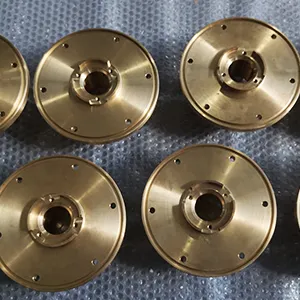
Lost Foam Casting
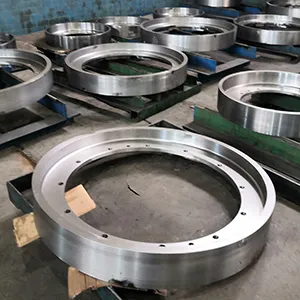
Lost foam casting, also known as full-mold casting or dry-sand vacuum casting (EPC/LFC), is a near-net-shape process that needs no parting lines, no pattern drawing, and no cores. A foam pattern is vaporized by the molten metal, which then fills the space the pattern occupied and solidifies into the finished part.
The process suits small-batch, high-variety production. For low-volume parts, especially those where hard tooling would be costly, patterns can be made individually, and it handles larger parts well.
Lost Foam Castings
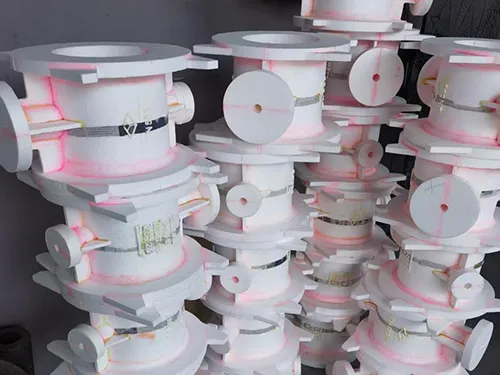 Foam Pattern
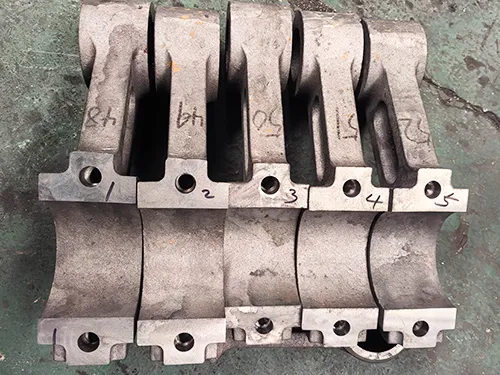 Connecting Rod Casting
Material Options
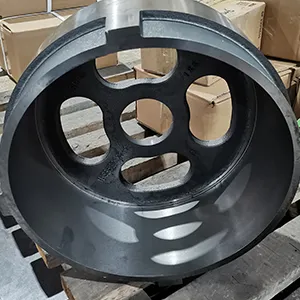
Cast iron, cast steel, and stainless steel parts can all be produced by lost foam casting.
- Cast Iron: Gray iron (e.g., HT150, HT200), ductile iron (QT400-15, QT500-7, QT600-3), and malleable iron
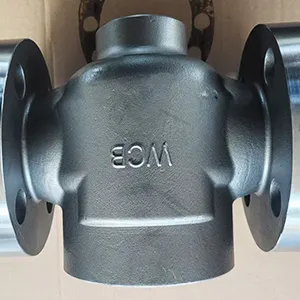
- Cast Steel: Medium- and low-carbon steel and low-alloy steel castings (e.g., WCB, 1045, 40Cr, 42CrMo, ZG230-450), plus high-carbon and high-alloy steel
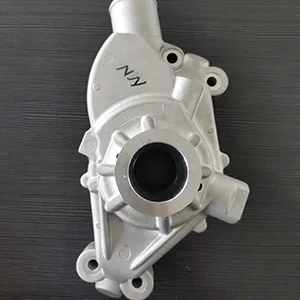
- Aluminum Alloys / Copper Alloys: Aluminum alloys (e.g., ZL101, ZL104, ZL111), copper alloys, and magnesium alloys
- Other Special Alloys: With specialized coatings and process controls, lost foam can also be used for duplex stainless steel, nickel-based alloys, and high-manganese steel
Technical Parameters
| Part Weight | 1 kg - 50 kg |
| Minimum Wall Thickness | 3-5 mm |
| Surface Roughness | Ra 6.3-12.5 μm |
| Tolerance Grade | CT7-CT9 |
Processes
- Foam bead pre-expansion →
- foam pattern making →
- pattern bonding and assembly →
- refractory coating dip →
- coating drying →
- flask filling with sand →
- vibration compaction →
- vacuum sealing →
- melting and pouring →
- cooling and shakeout →
- cleaning and inspection →
- finished part
Characteristics of Lost Foam Casting
- Lost foam casting offers high dimensional accuracy and minimal machining allowance, making it suitable for the production of components with complex geometries. By utilizing a foam pattern in place of a conventional sand mold, the process enables direct molding without parting lines or sand cores. Castings are produced without flash or burrs, while dimensional deviations associated with sand core assembly are eliminated.
- Dimensional accuracy can typically reach CT7-CT9, with surface roughness values of Ra 6.3-12.5 μm. Since there is no need to consider parting lines or draft angles, complex features such as deep holes, intricate internal cavities, and curved surfaces can be formed as an integral part of the foam pattern, providing greater design flexibility.
- Due to stable mold filling and a dense casting structure, the mechanical properties of castings produced by this process are typically 5%-10% higher than those of conventional sand castings.

Why Choose Huacheng
- More than 30 years of manufacturing and export experience, with extensive knowledge of international logistics and industry-specific technical standards.
- Full support from tooling design and sample development through to high-volume production, precision machining, and surface treatment.
- A strict ISO 9001 quality management system, backed by CMM (coordinate measuring machine) inspection and non-destructive testing (MT, RT, PT).